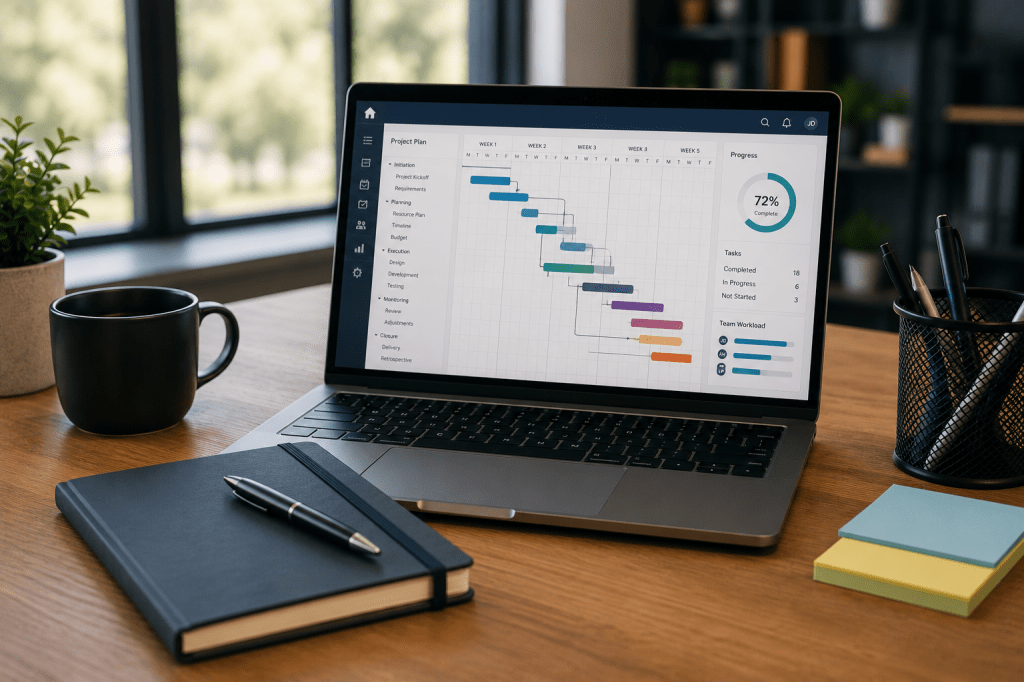
AI will not eliminate the need for Project Managers but it is already changing the role and changing the nature of projects that organizations embark on. Successful PM’s will be master communicators, workflow designers, risk managers, and leaders. Here’s how I imagine the role shifting in the next 10 years.
The Work: Less Admin, More Design
Today, many PMs spend hours collecting updates, sending reminders, summarizing meetings, tracking overdue tasks, and preparing status reports. Over the next 10 years, the time spent on these tasks will be reduced. The technology already exists but the tools will become better and more widely adopted. Routine tasks can be augmented or handled by AI agents.
Project managers will spend more time shaping how work gets done. Successful PMs will need to manage AI-supported processes, introduce new technologies thoughtfully, and understand where human review is still necessary. Governance, risk, judgment, business value, and quality control will become increasingly important as PMs decide how technology should support project delivery. The best PMs will continue to rely on skills that are already essential today but will become even more valuable in the future such as:
- Stakeholder management
- Clear communication
- Critical thinking
- Sound judgment
- Adaptability
- Conflict resolution
- Strategic thinking
- Decision-making
- Relationship building
- Leadership and influence
Managing AI Alongside People
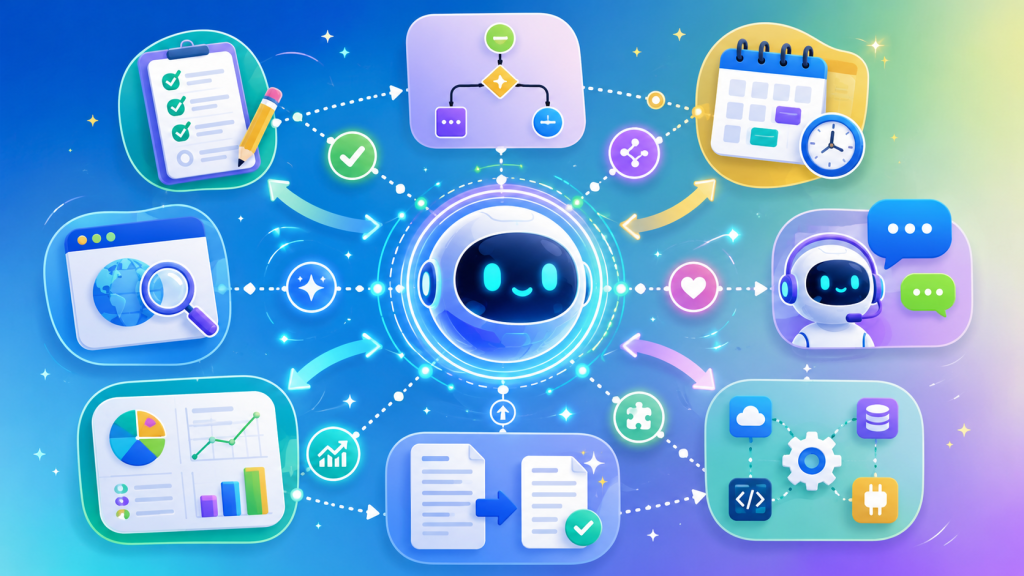
In the future more project managers will find themselves managing specialized AI agents and agentic workflows used for scheduling, reporting, risk monitoring, and communication. AI agents are not people but require, perhaps, more oversight in the same key areas a human PM team would. PM’s will need to:
- Set clear goals and limits with AI agents (scope)
- Review unusual results (human in the loop)
- Monitor performance (traceability)
- Correct mistakes (workflow checkpoints)
- Control what actions an agent can take (governance)
Along with managing AI processes- an organization should consider their pipeline of PM recruits. As AI takes over more entry-level tasks, organizations may need to intentionally preserve junior roles or create new training paths, so they don’t weaken the pipeline of experienced project leaders.
Governance and Accountability
As AI becomes more involved in project delivery, governance will become a larger part of the PM role. AI can produce inaccurate information, expose sensitive data, or take actions beyond its intended authority if the workflow is not designed carefully. Project managers will need to make sure controls are built into the process from the beginning, not added after something goes wrong. PMs will help determine:
- Where human approval is required
- What data an AI agent can access
- Which actions it can complete independently
- How decisions and outputs are documented
- Who is accountable when an error occurs
- What quality measures should be monitored
AI may complete the task, but accountability will still belong to the organization and the people who approve its work. Strong project managers will need to balance speed and efficiency with safety, transparency, compliance, and quality.
Human Skills will Matter More
AI doesn’t understand the conflict, hesitation, politics, or competing priorities behind many business decisions. Project Managers will still need to read the room, which is something an LLM could never do. Trust building, leadership, insight, judgement…. the tools will change over time but the core value of the role remains.





Leave a Reply