Most businesses are pretty good at paying attention to their business’s internal environment. Sales, expenses, growth, customer engagement etc. But some of the biggest threats and opportunities come from outside the business. The challenge is recognizing these changes before they start affecting your bottom line.
External environmental analysis is a process for continuously evaluating and responding to changes outside the organization. The basic idea is pretty simple: look outside your business, identify what is changing, and figure out what those changes could mean for you.
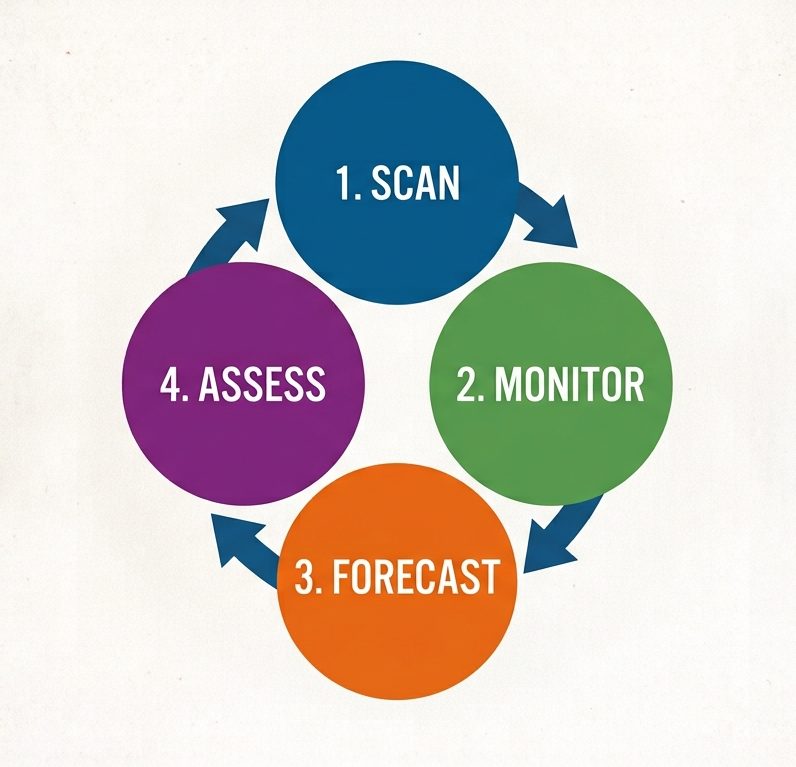
A useful way to do this is through four steps: scanning, monitoring, forecasting, and assessing.
External Environmental Analysis Process
Scanning is about paying attention to what is happening outside your organization. You aren’t necessarily looking for a problem yet. You’re looking for signals that something is changing. This could include changes in:
- Customer behavior
- Competitors
- Technology
- Regulations
- The economy
- Suppliers
- Labor markets
- Other industries
Monitoring means watching the signals you’ve identified and determining whether they’re becoming meaningful trends. Not every change matters.
A single competitor promotion probably isn’t a major strategic threat. But if competitors keep lowering prices, that’s different. A temporary increase in energy costs might not change your strategy, but a steady increase over several years probably deserves attention.
Forecasting doesn’t mean predicting the future perfectly. Instead, businesses can consider reasonable scenarios and ask what those scenarios could mean for the company. Now we’re moving beyond simply recognizing a trend. We’re thinking about its potential impact. Forecasting helps businesses get ahead of the problem instead of waiting until the problem arrives.
Assessing is the step where management determines what the business should do. A business can identify dozens of trends, but that doesn’t mean every trend requires action. Management needs to determine whether a change represents an opportunity, a threat, or both.
Try It With Your Own Business
You don’t need a team of strategists or a complicated spreadsheet to start doing this. Take a trend you’re noticing in your industry and ask yourself four questions:
- What is changing outside of our company? Think beyond your own organization. What are customers, competitors, regulators, suppliers, or other industries doing differently? Are there any external factors that could affect your business?
- Which changes are becoming trends? Look for patterns.
- What could these trends look like in 1-3 years? Think through a few reasonable possibilities and how they could affect your business.
- Is the external factor an opportunity, threat, or both? This is where observation turns into strategy. A new competitor could be a threat. A new technology could be an opportunity. Sometimes the same trend can be both an opportunity and a threat.
How often do you take time to analyse your external environment? How has it helped you?



 The Biz Cache
Leave a comment